Satoshi Nakamoto: Time Traveler, Visionary, or Something More? Unpacking the Untouched Bitcoin Fortune
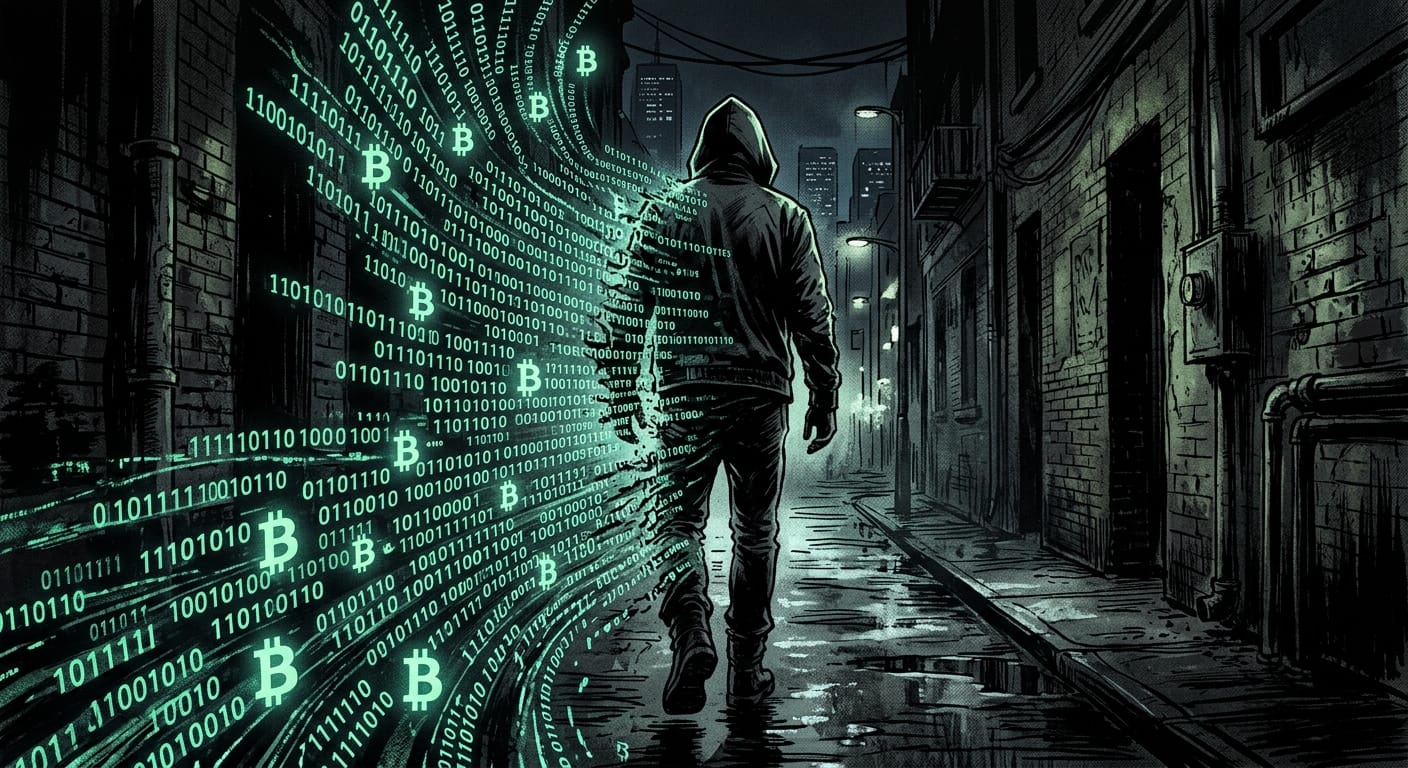
Satoshi Nakamoto: Time Traveler, Visionary, or Just Really Good at Hide-and-Seek?
The creation of Bitcoin by the ghost-like Satoshi Nakamoto didn’t just start a financial revolution; it launched a global scavenger hunt. But the prize isn’t a person—it’s an answer. The enduring Satoshi Nakamoto mystery and their untouched fortune of over a million bitcoins continue to fry the world’s collective circuit board. This vanishing act, a deliberate snub to unimaginable wealth, has spawned countless theories. So, what’s the deal? Could the much-debated Satoshi Nakamoto time traveler theory actually hold water?
Is Satoshi a modern-day philosopher, a secret government team, or a rogue AI that got really into economics? Or perhaps, just perhaps, are they a time traveler from a future where decentralization is as common as complaining about Wi-Fi? This post is strapping on its tinfoil hat to delve into the most compelling arguments for the time traveler theory, examining the digital breadcrumbs and the wild implications of this extraordinary possibility.
Table of Contents
The Ghost in the Machine: Satoshi’s Vanishing Act
Imagine inventing the internet and then, just as it’s getting good, you peace out forever. That’s basically what Satoshi Nakamoto did. After nurturing his brainchild for a couple of years, he abruptly ceased all communication in 2011. He left behind a legacy, a revolution, and, oh yeah, about 1.1 million bitcoins that have never, ever moved. This is the heart of the cryptocurrency creator enigma.
The Irish Goodbye of the Century
Satoshi’s final messages were chillingly casual. In his last known email to another developer, he wrote, “I’ve moved on to other things.” This is the equivalent of inventing fire and then saying, “Well, that was fun. I’m off to try basket-weaving.” This nonchalant exit from a project with world-changing potential is what makes the Bitcoin founder disappeared narrative so compelling. He simply… stopped.
The Sound of Digital Silence
Since that last email, there has been nothing. No forum posts, no code commits, no emails. Just the deafening silence of a digital ghost. The thousands of addresses in the presumed Satoshi Nakamoto wallet network remain dormant. This isn’t just a quiet retirement; it’s a complete and total erasure from the very world he created. The discipline is, frankly, terrifying.

The Baby Left on the Doorstep
Satoshi’s disappearance forced the nascent Bitcoin network to grow up fast. Without its creator, the community had to self-organize, debate, and evolve. It was a sink-or-swim moment. This forced decentralization Bitcoin was perhaps Satoshi’s final, most brilliant gift. He didn’t just create a decentralized currency; he decentralized its leadership by removing himself from the equation entirely.
The Untouched Fortune: Exploring the Satoshi Nakamoto Time Traveler Theory
Let’s talk about the big, sparkly elephant in the room: Satoshi’s missing billions. We’re not talking about a misplaced wallet with a few coins. We’re talking about a digital treasure chest that makes Scrooge McDuck’s money bin look like a piggy bank. The fact that this untouched Bitcoin fortune sits there, day after day, is the biggest piece of evidence for… well, something weird.
The Billion-Dollar Paperweight
At its peak, Satoshi’s hoard was worth nearly $70 billion. You could buy a small country with that. Or a lifetime supply of guacamole. Yet, not a single satoshi has been spent. This level of self-restraint is superhuman. No one, no matter how principled, would leave that kind of money on the table unless they had a very, very good reason. Perhaps a reason not of this time?
Following the Patoshi Pattern
How do we even know these coins belong to one person? Forensic analysis points to the “Patoshi Pattern.” This unique pattern in early mining data suggests a single, dominant miner was responsible for a huge chunk of the first blocks. This miner’s software had a distinct digital fingerprint, different from others. This evidence strongly links the massive stash to one entity, widely believed to be Satoshi.
The Ultimate Flex: Financial Abstinence
Walking away from billions is the core of the Satoshi Nakamoto mystery. It’s an act that defies human nature. Greed is a powerful motivator. By refusing to touch the funds, Satoshi ensured no single person could be seen as having ultimate control or profiting unfairly. This act of sacrifice cemented Bitcoin’s decentralized ethos. Or, it could be that to a time traveler, this fortune is essentially Monopoly money.
The Time Traveler Theory: Did Satoshi Leave Clues from the Future?
Okay, let’s get weird. The Satoshi Nakamoto time traveler theory sounds like something you’d cook up after three energy drinks at 4 AM. But when you look at the circumstantial evidence, it’s… disturbingly plausible. The theory suggests Satoshi traveled back to our time to deploy a technology necessary for humanity’s future, but couldn’t interfere any further.
A Perfectly Timed Financial Liferaft
Bitcoin wasn’t launched on some random Tuesday. The whitepaper dropped in October 2008, and the network went live in January 2009. This was the absolute height of the global financial crisis. Banks were collapsing, trust in the system was shattered. It was the perfect moment for a peer-to-peer electronic cash system to appear. A little *too* perfect, perhaps? It’s like showing up with a fire extinguisher the moment a building catches fire.
The Genesis Block’s Headline News
Satoshi didn’t just mine the first block; he left a message in it. The coinbase of the Bitcoin genesis block contains the text: “The Times 03/Jan/2009 Chancellor on brink of second bailout for banks.” This wasn’t just a timestamp. It was a statement. A middle finger to the centralized financial system that was failing everyone. It was a mission statement, proving Bitcoin’s creation was a direct response to this crisis—or a historical event a time traveler knew was critical.

A Protocol Too Perfect?
Bitcoin’s design is eerily prescient. It solves the Byzantine Generals’ Problem, introduces digital scarcity, and functions without a central authority. For a single person (or even a small group) to get so much right on the first try is astonishing. Early developers who have built amazing tools on platforms like WordPress know that version 1.0 is almost never this robust. Could this sophisticated design be the result of decades of future iteration, brought back to us in its final form?
The Mindset of a Chrononaut
If you accept the premise of the Satoshi Nakamoto time traveler theory, his actions suddenly make perfect sense. Why would a time traveler care about billions of 21st-century dollars? To someone from a future with a different economic system, it would be worthless. Their motivation wouldn’t be wealth, but the successful deployment of a critical technology. It explains the ghosting, the untouched fortune, and the laser-focused mission. After a while, you could even trade Bitcoin for everything you might need on OKX Exchange or other marketplaces.
Alternative Explanations: Less Sci-Fi, More Likely?
While the time traveler narrative is a blast, we should probably put the tinfoil hat aside for a moment. Other, more grounded theories exist to explain the Satoshi Nakamoto mystery. They might be less fun, but they are certainly worth considering before we all start building DeLoreans.
The Supergroup Theory: Crypto’s Traveling Wilburys
Perhaps Satoshi wasn’t one person but a collective. This would explain the diverse skillset on display: advanced cryptography, C++ coding, economics, and networking. A group of academics or cypherpunks working in concert makes a lot of sense. A pact of silence among a group would also be easier to maintain than one person holding the secret for over a decade.
Rise of the Machines: The AI Theory
Could Satoshi be an early, rogue artificial intelligence? An AI could possess the raw intellectual power to design Bitcoin. It would also explain the lack of human emotion, greed, or ego. This AI’s only goal might have been to solve a logical problem, and once the network was stable, it simply moved on. Perhaps it is still out there, creating new projects with tools like get creative contents with AI Content X Studio to further its goals.
The Simplest Answer: Lost Keys & Paranoia
The most boring—and therefore most likely—explanation is also the most tragic. Satoshi could be an individual who is now deceased. Or, in a moment of supreme irony, they may have lost the private keys to their massive fortune. Imagine creating the world’s most secure asset and then locking yourself out. Alternatively, extreme paranoia about being identified by governments or criminals would be a powerful incentive to disappear completely.
Conclusion: The Legend Lives On
The Satoshi Nakamoto mystery is more than a whodunit; it’s a foundational myth of the digital age. While we may never have definitive proof, the Satoshi Nakamoto time traveler theory offers a uniquely compelling lens to view his actions. It frames the creation of Bitcoin not as an act of invention, but as an act of profound foresight and sacrifice for a decentralized future.
Whether Satoshi was a lone genius, a team, an AI, or a visitor from another time, their legacy is undeniable. They gave the world a tool for financial sovereignty and then vanished, leaving us to figure out what to do with it. The untouched Bitcoin fortune remains a silent, glittering testament to their principles, whatever they may have been.
What’s your take? Are you on Team Time Traveler, or do you have another theory? Share this post and let’s debate! Using a tool like JetPack for social media auto publisher can help get the conversation started. Let us know your wildest ideas in the comments below!
Discover more from YuRaFa
Subscribe to get the latest posts sent to your email.








Leave a Reply