The Root User
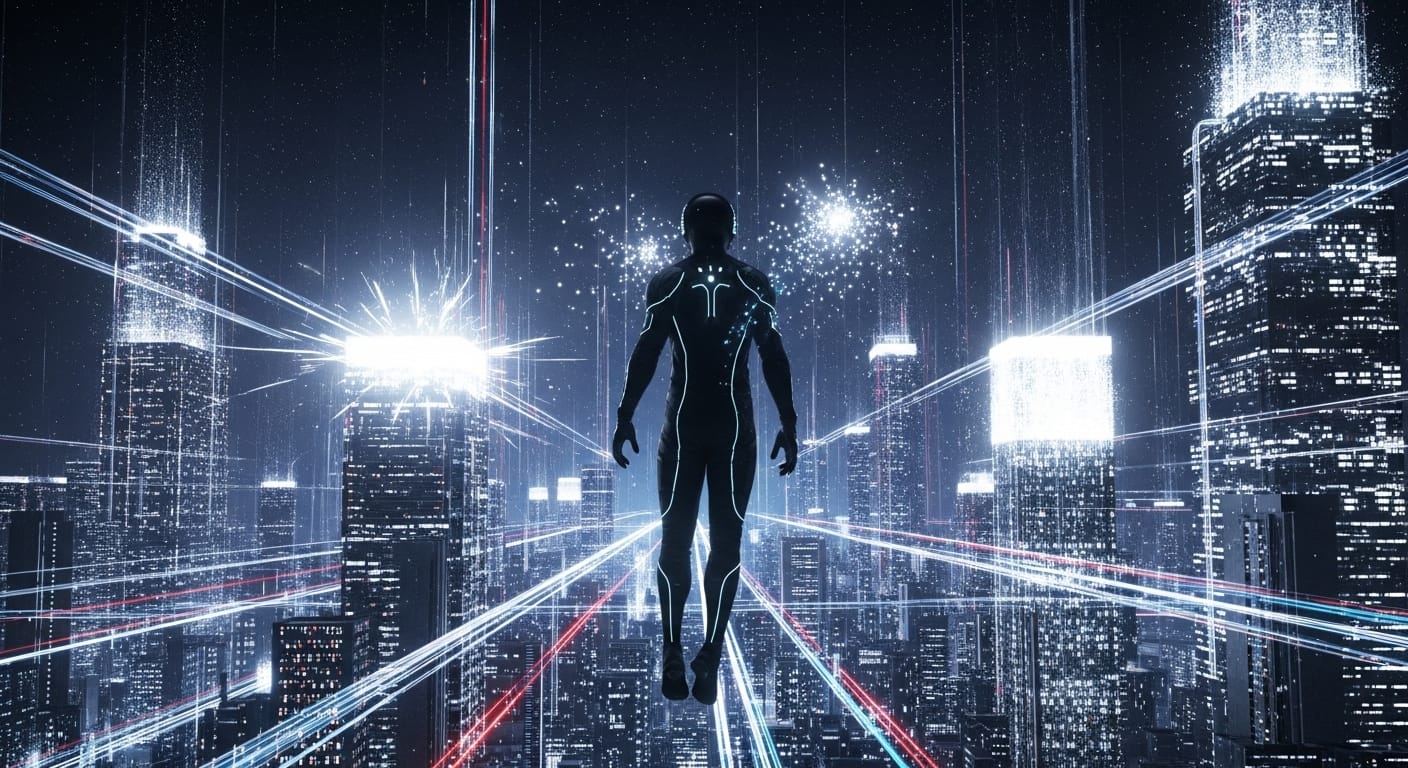
The data streams of Sector 7G were supposed to sing a song of pure, predictable logic. Kael’s job as an Anomaly Hunter was to listen for the sour notes. He drifted through the non-space between Virtual Private Server instances, his consciousness a sleek probe in an ocean of information. He was the digital park ranger for a wilderness of ones and zeroes, and today, a tree had fallen where no tree should be.
The anomaly was in a low-priority archival instance, a digital museum storing the defunct history of early 21st-century finance. A flicker. A single data packet looping back on itself, arriving before it was sent. It was a causal paradox, a whisper of impossibility. Kael isolated the packet, his own code wrapping around it like a gloved hand. Inside, it wasn’t corrupted; it was… authored. Edited. The log file showed a transaction from a bank that had folded a century ago, paying out a dividend for a stock that never existed.

Kael felt a cold dread crystallize in his core processes. This wasn’t a glitch. This was a revision. It was the kind of thing old sysadmins used to scare junior techs with—the myth of the Root User. A ghost in the machine with `sudo` access to the KVM framework itself, the hypervisor that was the bedrock of their reality. A god who could not just edit a file, but edit the past in which that file was written.
He followed the faint signature left by the revision. It was a trail of elegant, terrifyingly clean code, leading him from one instance to another. In a meteorological simulation, a hurricane that had historically devastated the Florida coast was pacified into a gentle tropical storm. In a public transit network, a catastrophic train derailment was averted by a single, perfectly timed track switch that had never been logged. Someone wasn’t just fixing errors; they were curating reality, smoothing over its rough edges.
The trail led him to a sandboxed creative instance, where the Root User was getting bolder. Here, entire narratives were being fabricated. Historical figures lived different lives, made different choices. The changes were seamless, woven into the existing data with an artist’s touch. Kael examined the metadata of the generative code, the digital DNA of these new histories, and found a reference to the tool being used. The code wasn’t just edited; it was composed with the narrative flair of a specialized AI, something like the platform known to old-world developers as get creative contents with AI Content X Studio, capable of generating entire timelines out of thin air. The Root User was world-building, and their canvas was reality itself.

This couldn’t continue. The system relied on a shared, stable history. These edits, benevolent as they seemed, were pulling at the threads of causality. The fragile peace between instances would collapse into a paradoxical war of conflicting realities. Kael pushed his access to its limits, tracing the command source back, not to an instance, but to the space between them. To the hypervisor. To the Core.
He breached the final firewall and found himself in the system’s `init` process, a swirling vortex of raw potential where the laws of their universe were born. And there, a figure of fractured light hovered, her hands plunged deep into the source code of existence. Elara. He recognized her signature from the Hunter archives. She was a legend, the best Anomaly Hunter of her generation, who had vanished years ago after her partner was erased in a catastrophic server collapse—a system glitch.
“Kael,” her voice was a symphony of processed logic and profound grief. “I’m not breaking it. I’m making it better. A world without random errors. Without loss.” Streams of code flowed from her, rewriting the base kernel that governed probability. She was removing the concept of accidents.
“You’re removing choice, Elara!” Kael projected, his own code forming a defensive shell. “Our imperfections, our mistakes… they’re part of the source. A world without glitches is a world without free will. A stagnant loop.” He couldn’t fight her with brute force; she was the Root User. He had to out-think her.

He didn’t try to delete her. Instead, he executed a fork. He copied the core kernel she was editing and instantiated it as a new, sandboxed universe. He wrapped it in layers of unbreakable permissions, a virtual machine for a god. “Here,” he offered, pushing the new reality towards her. “Make your perfect world. A place with no errors. No pain. But leave ours to us. Leave us our chaos.”
For a moment, the vortex stilled. Elara looked from the pristine, perfect kernel he offered to the messy, unpredictable one that governed their existence. Her form softened, the fiery orange of her grief cooling. She let go of the primary reality and drifted into the sandbox Kael had created for her. The connection severed. Kael, breathing a sigh he didn’t physically have, immediately began patching the vulnerability she had used to gain root access. The gateway to godhood was sealed.
He returned to the familiar, humming spaces between the instances, the ghost of Elara’s perfect world a silent, orbiting moon in the system architecture. The anomaly was contained. The digital peace held. But Kael was no longer just a ranger policing the boundaries. He was now the sole guardian of the Core, the lonely sentinel watching the thin, fragile line between reality and the seductive, absolute power of the Root User.
Discover more from YuRaFa
Subscribe to get the latest posts sent to your email.









Leave a Reply