The Symbiotic Future: Navigating the Intertwined Destinies of Humans and AI
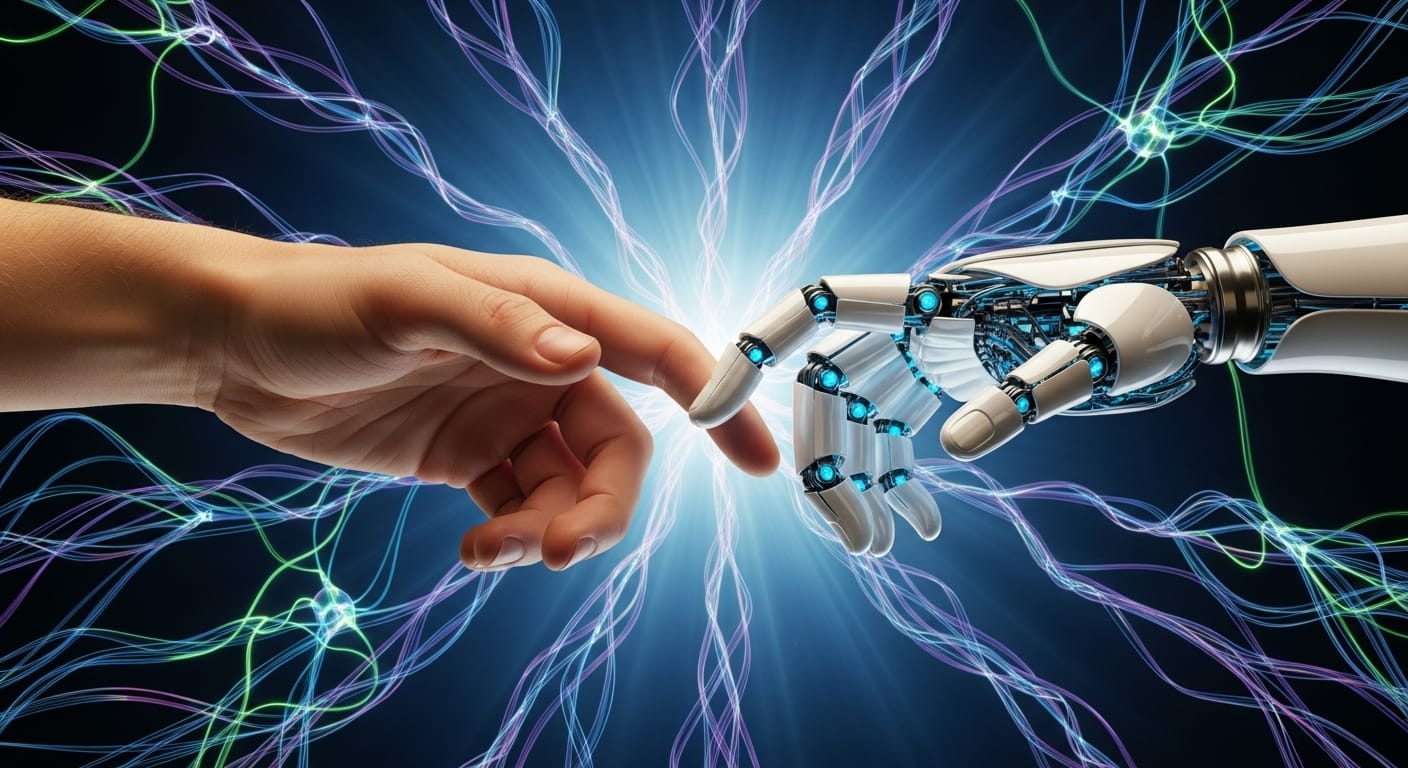

Let’s be real, artificial intelligence isn’t some far-off concept from a movie anymore. It’s here, and it’s weaving itself into the fabric of our daily lives faster than you can say “Hey, Siri.” From the algorithm that picks your next binge-watch to the complex systems revolutionizing entire industries, AI’s footprint is massive and growing by the second. This isn’t just about co-existing with smart tech; we’re heading towards a future where our destinies are deeply intertwined. So, let’s dive into what this symbiotic relationship looks like, exploring the incredible opportunities and the very real challenges ahead.
AI as an Augmentation, Not a Replacement
The first thing to get straight is that the common fear of “robots taking all the jobs” is a bit of a misconception. It’s more helpful to think of AI as the ultimate sidekick—a powerful tool that enhances our own abilities rather than making them obsolete. Think about it: AI can sift through mountains of data in seconds, a task that would take a team of humans years. It can handle the mind-numbingly repetitive tasks on our to-do lists, freeing us from digital drudgery.
This partnership is where the magic happens. When AI takes care of the heavy lifting and the monotonous work, we humans are freed up to do what we do best: think creatively, strategize for the future, and connect with each other on an emotional level. In fields from medicine to marketing, this collaboration is already leading to breakthroughs we could only dream of a decade ago. It allows us to focus on innovation and complex problem-solving. For instance, creators can now get creative contents with AI Content X Studio, using AI as a brainstorming partner to generate unique ideas and first drafts, dramatically speeding up their workflow without sacrificing their unique human touch.
Ethical Frontiers and Societal Transformation
Okay, it’s not all sunshine and roses. As AI gets more sophisticated, we bump into some serious ethical questions that we can’t ignore. How do we prevent human biases from being coded into algorithms, leading to unfair outcomes? Who is accountable when an autonomous system makes a mistake? And what about our data privacy in a world where AI is constantly learning from our every click?
These are tough but crucial conversations. Beyond the ethical maze, we have to consider the massive impact on jobs. While AI might not replace everyone, it will certainly change the nature of work. This means we desperately need to rethink our education systems. We need to focus on lifelong learning and create accessible retraining programs to help the workforce adapt. Building new courses and learning platforms will be key, and tools like Sensei, a learning management system, can empower educators to quickly develop the very training initiatives required to prepare people for this new, AI-integrated reality.

The Evolution of Human-AI Collaboration
So, what does this human-AI teamwork actually look like in practice? It’s already happening in some amazing ways. In the creative world, musicians are using AI to compose new melodies, and artists are co-creating visual masterpieces with generative algorithms. In science, AI is accelerating research by identifying patterns in complex datasets, helping us find new medicines and understand climate change faster than ever before.
In healthcare, doctors are using AI as a diagnostic partner that can spot subtle signs of disease in medical scans, leading to earlier and more accurate diagnoses. The success of these partnerships hinges on a few key things: intuitive interfaces that make the technology easy to use, building trust in the AI’s outputs, and establishing clear rules for how humans and AI communicate and work together. We’re seeing this in content creation, where platforms like Synthesia allow anyone to generate professional-looking videos with AI avatars, turning a complex production process into a simple, collaborative task.
Shaping a Co-Prosperous Future
The future isn’t something that just happens to us; it’s something we build. To make sure our intertwined destiny with AI is a positive one, we need to be proactive. This starts with creating smart, flexible regulations that encourage innovation while protecting people. We can’t leave these decisions solely to tech companies or governments; it needs to be a global conversation.
Investing in public education is also critical. Everyone, not just programmers, needs a basic level of AI literacy to understand how this technology works and affects their lives. By fostering collaboration between the tech wizards, ethicists, artists, policymakers, and the general public, we can ensure that the goals we program into our AI systems are aligned with our own human values. The ultimate aim is to build a future where both humans and artificial intelligence can thrive together, sustainably and for the benefit of all.
The journey of integrating AI into our world is well underway, and the question is no longer “if” but “how.” It’s a path filled with complex ethical puzzles and big societal shifts, but the potential is absolutely staggering. We’re looking at a future of incredible co-creation, augmented intelligence, and progress we can barely imagine. By championing responsible development, demanding thoughtful policies, and keeping the conversation going, we have the power to steer this revolution. We can shape a truly symbiotic future where AI acts as a powerful catalyst for a smarter, more innovative, and more equitable world for everyone.
Discover more from YuRaFa
Subscribe to get the latest posts sent to your email.






Leave a Reply