When the World Woke Up: The Dawn of AI Transformation in Public Consciousness
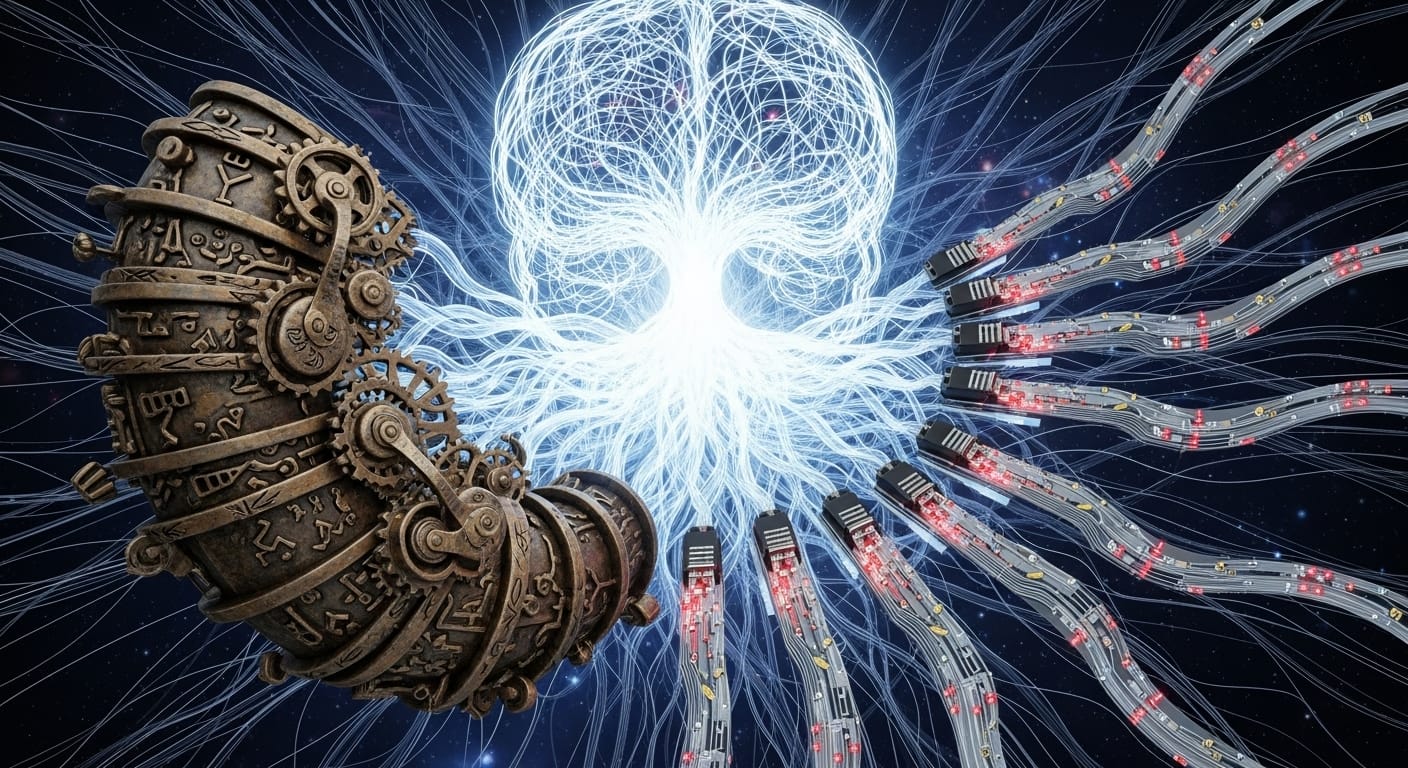

Artificial intelligence, a term that now buzzes in every corner of the internet, wasn’t born overnight. For a long time, it was the exclusive domain of sci-fi paperbacks and quiet university labs. While its roots dig deep into ancient philosophy and early computer science, there was a specific moment, a tipping point, when AI went from a background hum to a main-stage event. It’s the story of how an abstract idea became a tool on your desktop, a voice in your phone, and a major force shaping our world. Let’s trace that journey from the dusty archives to the viral headlines.
The Quiet Genesis: From Ancient Myths to Early AI Labs (Pre-1990s)
Believe it or not, the dream of artificial beings has been with us for centuries. Think of the ancient Greek myths of Hephaestus and his mechanical servants or the Golem of Prague. These stories planted the seed of an idea: what if we could create non-human intelligence? For a long time, that’s all it was—a dream.
The 20th century turned this dream into a scientific pursuit. Pioneers like Alan Turing asked, “Can machines think?” and laid the theoretical groundwork. In 1956, the term “artificial intelligence” was officially coined at the Dartmouth Workshop, a summer conference that brought together the brightest minds to explore this new frontier. What followed were decades of slow, often underfunded, but foundational research in specialized labs. This was the era of “Good Old-Fashioned AI,” focused on logic, rules, and problem-solving within very narrow constraints.
Breaking Through: AI’s First Public Showcases and Expert Systems (1990s – Early 2000s)
For most people, the first time AI felt real was on May 11, 1997. That was the day IBM’s supercomputer, Deep Blue, defeated world chess champion Garry Kasparov. It was a landmark moment—a machine had publicly out-strategized the best human player in one of the most intellectually demanding games. The event sparked both wonder and a bit of unease, making headlines around the globe.
Beyond the chessboard, AI was quietly making its way into the business world. “Expert systems” were developed to mimic the decision-making ability of a human expert in specific fields like medicine or finance. While they weren’t household names, they proved that AI could have practical, commercial value, setting the stage for bigger things to come.
The Ubiquitous Assistant: AI Silently Integrates into Everyday Life (Mid-2000s – Early 2020s)
This is the era when AI became the invisible engine of our digital lives. You started using it every day, probably without even realizing it. The “customers who bought this also bought…” suggestions on Amazon? That’s AI. The way Netflix uncannily knows you’d love that obscure documentary? AI. The spam filter that keeps your inbox clean? You guessed it—AI.
This period also saw the rise of more obvious helpers. Apple’s Siri, launched in 2011, put a conversational AI in millions of pockets. It was soon followed by Amazon’s Alexa and Google Assistant. These tools normalized the idea of talking to technology. At the same time, AI-powered chatbots were becoming the first line of defense for companies looking to provide the best customer service for your website, answering queries and solving problems around the clock.

The Generative Explosion: When AI Demanded Our Attention (2022 – Present)
Everything changed in late 2022. While AI had been getting smarter in the background, this was the moment it became accessible and breathtakingly creative. The public release of large language models like ChatGPT and image generators like DALL-E 2 and Midjourney was a seismic shift. Suddenly, anyone with an internet connection could generate essays, write code, create stunning art, or even produce entire video scripts just by typing a few words.
This wasn’t just a technological leap; it was a cultural one. AI went viral. It was no longer a passive recommendation engine but an active collaborator. This new wave of generative tools empowers creators and businesses to produce amazing work faster than ever. For instance, you can get creative contents with AI Content X Studio to draft blog posts and marketing copy, or use platforms like Synthesia to create professional-looking videos with AI avatars, a task that once required a full studio and crew. This “generative explosion” put the power of AI creation directly into our hands, forcing everyone to pay attention.
Navigating the New Era: Societal Impact, Ethics, and the Future of AI Awareness
Now that the AI genie is out of the bottle, we’re all grappling with the consequences. The conversation has moved from “What can it do?” to “What should it do?” We’re facing a host of complex questions. How will AI impact the job market? How do we prevent biases from being encoded into these systems? How do we combat misinformation and deepfakes?
These aren’t easy questions, and they don’t have simple answers. The key is to move forward with our eyes wide open. Promoting AI literacy, encouraging public dialogue, and establishing ethical guidelines for development are no longer optional—they’re essential. This new era demands a proactive approach to ensure that as AI becomes more powerful, it remains a tool for human progress.
From mythological automatons to chess-playing supercomputers and finally to conversational AI accessible to millions, the journey of artificial intelligence into public consciousness has been a gradual yet accelerating one. While AI has been developing for decades, it is truly in the last few years, particularly with the advent of generative AI, that the world has collectively started to grasp the profound implications of this technological transformation. As AI continues to evolve at an unprecedented pace, fostering widespread understanding and responsible development remains crucial for shaping our shared future.
Discover more from YuRaFa
Subscribe to get the latest posts sent to your email.







Leave a Reply